Kitten Vaccinations at a Glance
A tiny jab at the right time can protect your kitten for a lifetime. Here’s a quick rundown of the most common questions new kitten parents ask about vaccinations – answered.
- When should my kitten be vaccinated? Core vaccinations are given in three stages: 6–8 weeks, 10–12 weeks, and 14–16 weeks. Your vet will confirm the best schedule for your kitten.
- What do core vaccines protect against? Feline respiratory disease (herpesvirus), feline calicivirus, and feline enteritis (panleukopenia). These are highly infectious and can be serious.
- Is my kitten protected before vaccinations? Partially – maternal antibodies from their mother’s milk offer temporary protection, but these fade over time. Full protection comes only after the complete vaccination course.
- When can my kitten go outside? Ten days after their final vaccination at 14–16 weeks. Until then, supervised time in an enclosed outdoor space is the safe alternative.
- Can my kitten meet other cats? Only fully vaccinated cats. Even then, practise good hygiene – wash hands before and after contact.
- Do indoor-only cats need vaccinations? Yes. Cat flu and feline enteritis can spread through contaminated surfaces, clothes, and shoes – your indoor kitten is still at risk.
When is your kitten first able to be vaccinated?
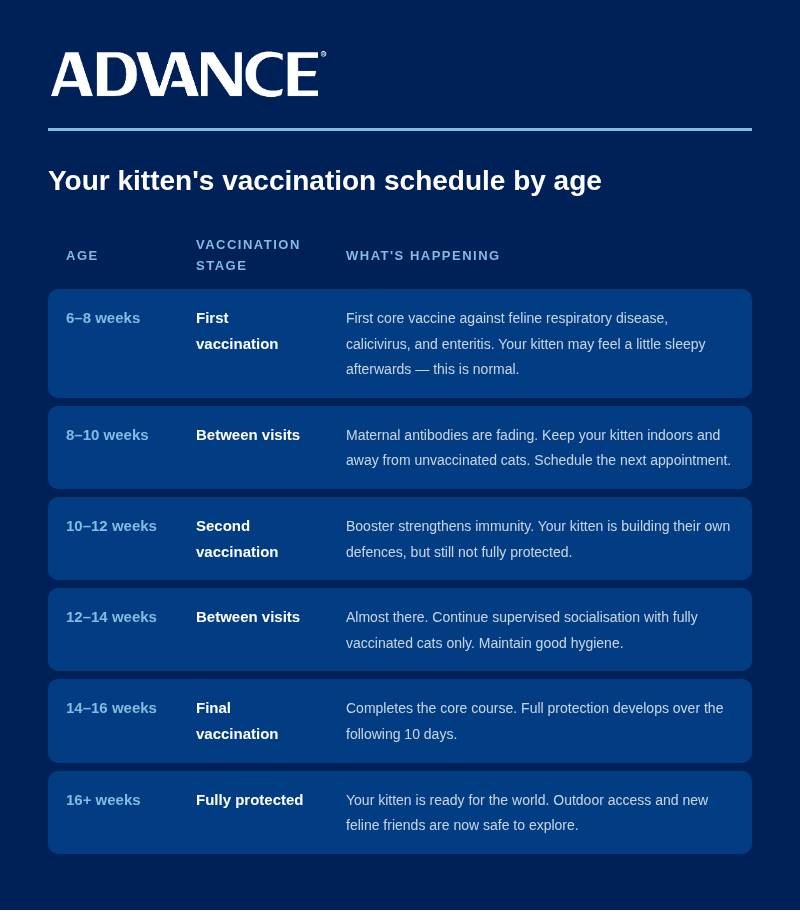
In Australia, core vaccines are recommended for all cats. These ensure protection against common diseases, such as feline respiratory disease, feline calicivirus and feline enteritis. Because your kitten’s immune system is still developing, it’s important to start their vaccinations when they are quite young: around the age of 6-8 weeks – with another set at 10-12 weeks and a final round at 14-16 weeks.
Your Kitten’s Vaccination Schedule by Age
Here’s a simple visual timeline so you know exactly what to expect at each stage. Mark these dates in your calendar – your future cat will thank you.
Understanding the Risks Before Vaccinations
In those early weeks, your kitten is navigating a big world with a still-developing immune system. Knowing what’s at risk – and how serious those risks can be – helps you make smart choices that keep them safe without holding them back from growing into a confident, happy cat.
- Feline Respiratory Disease (Herpesvirus). A common and highly contagious viral infection that causes sneezing, nasal discharge, and eye problems. Even indoor cats can be exposed through contaminated surfaces, clothes, and shoes. Once infected, cats can carry the virus for life, with flare-ups during times of stress.
- Feline Calicivirus. Another highly infectious respiratory virus that causes mouth ulcers, fever, and joint pain. It spreads easily through direct contact and shared environments. Some strains can be severe, making vaccination your kitten’s best line of defence.
- Feline Enteritis (Panleukopenia). A devastating viral disease that attacks the digestive and immune systems. It is extremely contagious and can survive in the environment for months. Vaccination has made it rare in Australia, but it remains a serious threat to unvaccinated kittens – so staying on schedule matters.
- Feline Leukaemia Virus (FeLV). A non-core vaccine your vet may recommend if your kitten will have outdoor access or contact with other cats. FeLV suppresses the immune system and can lead to serious illness over time. Talk to your vet about whether this vaccine is right for your kitten’s lifestyle.
The good news? These risks are manageable. By keeping your kitten’s environment clean, limiting contact with unknown cats, and staying on top of their vaccination schedule, you’re giving them the safest possible start – and setting them up for a long, healthy life.
When is it safe to expose your kitten to risks?
Kittens have temporary protection against diseases thanks to antibodies from their mother’s milk. However, these antibodies won’t last forever so it’s important not to expose your kitten to unnecessary risks until they are fully vaccinated. Your kitten can be allowed outside ten days after they’ve completed their final set of vaccinations. Waiting this amount of time reduces the likelihood of your kitten contracting diseases such as feline enteritis or cat flu.
Ways to keep your kitten protected
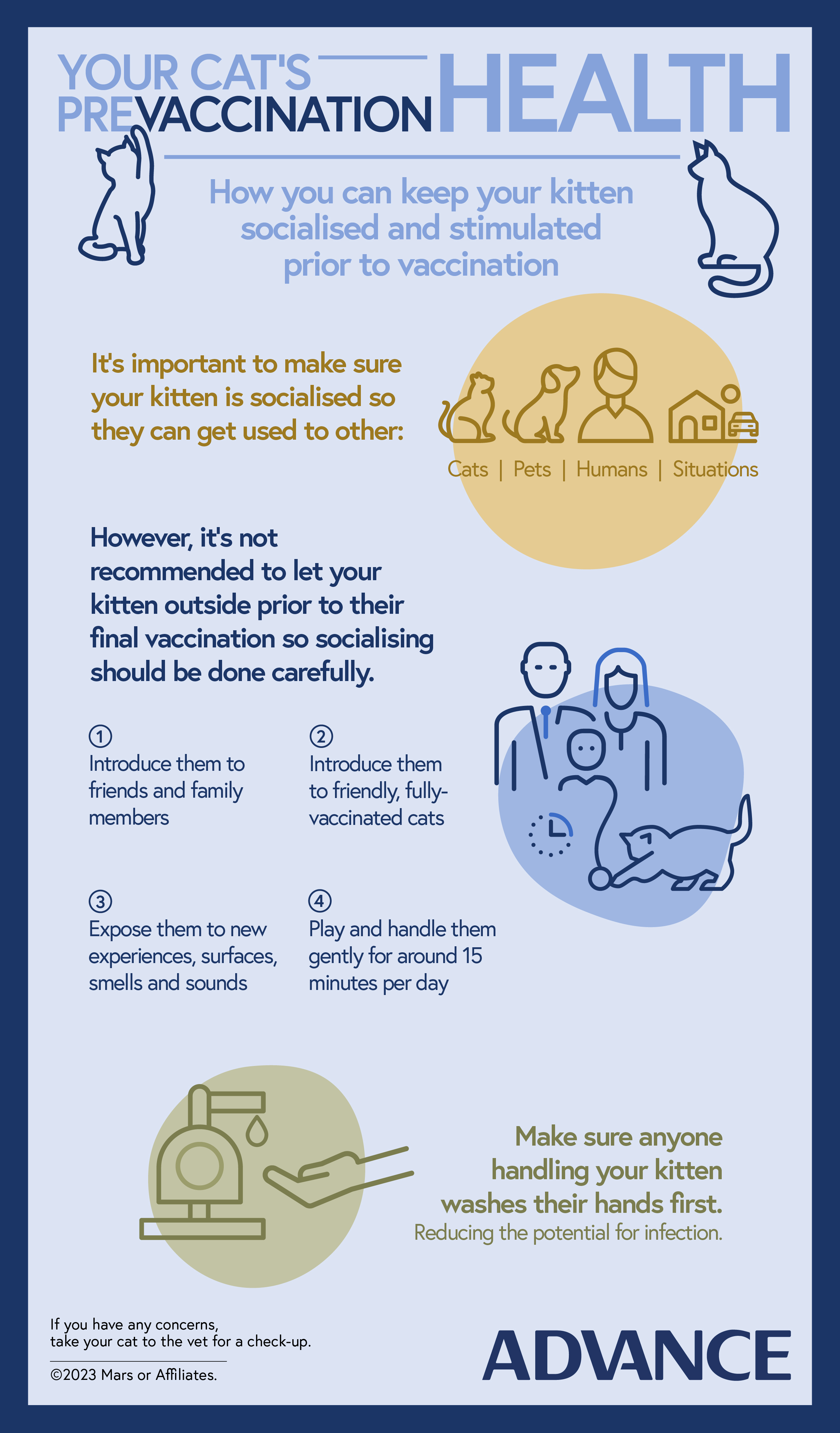
Until your kitten has received all their vaccinations, it’s important to make sure they only socialise with fully-vaccinated cats. To reduce the potential spread of infections, wash your hands when you come back home – especially if you’ve been in contact with other cats. What if you’re planning to raise your kitten as a house cat? It’s still recommended to ensure your cat is, at a minimum, vaccinated against cat flu and feline enteritis – since these are highly infectious and can be spread to your cat through contaminated surfaces, clothes and shoes.
Take your kitten outside safely
A fenced off area or an outdoor space is a great place to let your kitten get some fresh air and stretch their legs until they are fully vaccinated. We recommend supervising them when you first take them outdoors until about the age of six months and when they’re able to find their own way back to your home. It’s important to only let your kitten outside after they have received their final set of vaccinations.
Here are some practical ways to give your kitten a taste of the outdoors while keeping them safe:
- Use a secure outdoor enclosure or “catio” – a fenced or netted space lets your kitten experience fresh air, sounds, and smells without the risk of contact with unknown animals.
- Try a harness and lead – many kittens can be gently trained to walk on a harness from around 8–10 weeks. Start indoors, keep sessions short, and always supervise.
- Choose quiet times of day – early morning or late afternoon tends to mean fewer dogs, people, and noise. A calmer environment helps your kitten feel relaxed and confident.
- Create a sensory corner – a box of cat-safe grass, catnip, or fresh herbs on a balcony or patio gives your kitten enrichment without leaving your home.
- Weather matters – avoid taking very young kittens outside in extreme heat or cold. Their bodies are still learning to regulate temperature.
Socialising your kitten safely
Once you have your kitten home and you’re looking to socialise them safely prior to their vaccinations, you can introduce your kitten to humans or other friendly pets, as well as fully-vaccinated cats. It is a good idea to make sure anyone handling your kitten has washed their hands, to reduce the spread of infection. Around 15 minutes a day of gentle handling can go a long way to helping your kitten get used to being held and played with, as well as increasing the likelihood they will be comfortable with other people later in life.
Want to give your kitten the best possible start socially? Here are some practical ways to socialise them safely before their vaccinations are complete:
- Start small and slow – introduce your kitten to one new person at a time in a calm, quiet room. Too many new faces at once can be overwhelming.
- Let the kitten set the pace – never force interaction. Allow your kitten to approach new people on their own terms. Some kittens are bold; others need time.
- Use positive reinforcement – offer a small treat or a favourite toy during new experiences so your kitten associates meeting new people with good things.
- Handle all the right spots – gently touch your kitten’s paws, ears, and mouth during daily handling sessions. This builds comfort for future vet visits and grooming.
- Introduce household sounds gradually – play recordings of vacuum cleaners, doorbells, or traffic at low volume, increasing over time. A confident kitten becomes a confident adult cat.
- Invite fully vaccinated, calm cat-friendly pets – a gentle older dog or a laid-back, fully vaccinated cat can teach your kitten valuable social skills.
- Keep sessions short and frequent – 5–10 minutes of positive social interaction, a few times a day, is more effective than one long session.
Introducing Your Kitten to the Great Outdoors Safely
The day your kitten is ready for the outdoors is an exciting milestone – but it’s one that deserves a thoughtful approach. A gradual, supervised introduction helps your kitten build confidence and stay safe, so they can enjoy their new freedom without unnecessary risk.
When’s the right time? Wait at least ten days after your kitten’s final vaccination at 14–16 weeks before allowing free outdoor access. This gives their immune system time to build full protection. Until then, supervised time in an enclosed outdoor space is the safest way to let them explore.
Their first outdoor adventure should be short, calm, and supervised. Pick a quiet time of day, stay close, and let your kitten explore at their own pace. Don’t be surprised if they’re cautious at first – everything outside is new, from the feel of grass to the sound of birds.
- Microchip and ID collar – before any outdoor access, make sure your kitten is microchipped with up-to-date details and wears a quick-release collar with an ID tag.
- Desex first – if your kitten hasn’t been desexed, talk to your vet about timing. Desexing reduces roaming behaviour and unwanted litters.
- Start with short sessions – 5–10 minutes at a time, gradually increasing. Go out with your kitten and stay within arm’s reach.
- Choose a familiar exit point – always let your kitten out through the same door so they learn their way back home. Carry them outside initially rather than letting them walk out on their own.
- Time meals around outdoor access – call your kitten in for dinner. A hungry kitten is more likely to come when called, and this builds a reliable recall habit.
- Watch the weather – avoid very hot, cold, or stormy days for early outings. Kittens are more sensitive to extreme conditions than adult cats.
- Be present, not just nearby – supervise outdoor time until your kitten is around six months old and confident finding their way home.
- Create a safe retreat – ensure your kitten always has access to a sheltered spot, water, and a way back inside.
Vaccinated and Unvaccinated Cats: Safe Interactions
One of the most common questions new kitten parents ask is whether their unvaccinated kitten can safely meet other cats. The answer depends on the vaccination status of everyone involved – and a few simple precautions can make all the difference.
Unvaccinated kitten meeting a fully vaccinated cat is generally safe, as long as the vaccinated cat is healthy and up to date with their boosters. A vaccinated cat poses a much lower risk of transmitting disease. However, they can still carry pathogens on their fur, paws, or in their environment – so it’s not zero risk. Wash your hands before and after handling, keep shared spaces clean, and monitor both cats for any signs of illness.
Unvaccinated kitten meeting an unvaccinated cat is not recommended. Both cats are vulnerable to infectious diseases, and the risk of transmission is significantly higher. If you must have both cats in the same household, keep them in separate rooms, avoid sharing food bowls, litter trays, or bedding, and schedule vaccinations for both as soon as possible.
Introducing your kitten to a resident cat should only happen once you’ve confirmed your resident cat is fully vaccinated. Even with a vaccinated resident cat, take introductions slowly – start with scent swapping (rubbing a cloth on each cat and placing it near the other), then progress to supervised visual contact through a door or baby gate, and finally short, supervised face-to-face sessions. Patience here prevents stress and sets up a positive long-term relationship.
Practical tips for safe interactions:
- Always confirm the vaccination status of any cat your kitten will meet. If in doubt, ask the owner or your vet.
- Wash your hands before and after handling different cats to reduce the risk of spreading pathogens.
- Keep litter trays, food bowls, and bedding separate until your kitten is fully vaccinated.
- Disinfect shared spaces regularly – viruses like feline calicivirus can survive on surfaces for days.
- Watch for signs of illness in either cat – sneezing, eye discharge, lethargy, or loss of appetite. If you notice anything unusual, separate the cats and contact your vet.
- When in doubt, wait. A few extra weeks of separation is far easier than treating a serious illness.
Before the Appointment: What Every Kitten Parent Should Know
A little preparation goes a long way. Knowing what to expect at your kitten’s vaccination appointment helps the visit go smoothly – and helps you ask the right questions so you leave feeling confident and informed.
- Bring your kitten’s records. If you have any previous vaccination records or health documents from a breeder or shelter, bring them along. Your vet will need this information to plan the right schedule.
- Prepare a list of questions. Write down anything you want to ask – diet, behaviour, desexing, flea and worming schedules, or when your kitten can go outside. No question is too small.
- Know your kitten’s history. Be ready to share details about your kitten’s age, where you got them, their current diet, and any symptoms you’ve noticed. This helps your vet tailor their advice.
- Expect a full health check. Your vet won’t just vaccinate – they’ll do a nose-to-tail examination, check weight, teeth, eyes, ears, and overall development. This is a great opportunity to catch any issues early.
- Ask about non-core vaccines. Depending on your kitten’s lifestyle (indoor-only vs outdoor access, multi-cat household, boarding plans), your vet may recommend additional vaccines like feline leukaemia virus (FeLV).
- Plan for aftercare. Your kitten may feel a little sleepy or tender at the injection site for 24–48 hours. This is normal. Provide a quiet, comfortable spot to rest, and monitor for any unusual reactions.
- Schedule the next appointment before you leave. Book your kitten’s next vaccination before you leave the clinic so you don’t lose track of the timeline. Consistency is key to full protection.
- Ask about parasite prevention. Vaccination appointments are the perfect time to discuss flea, tick, and worming treatments. Your vet can recommend a schedule that works alongside your kitten’s vaccinations.
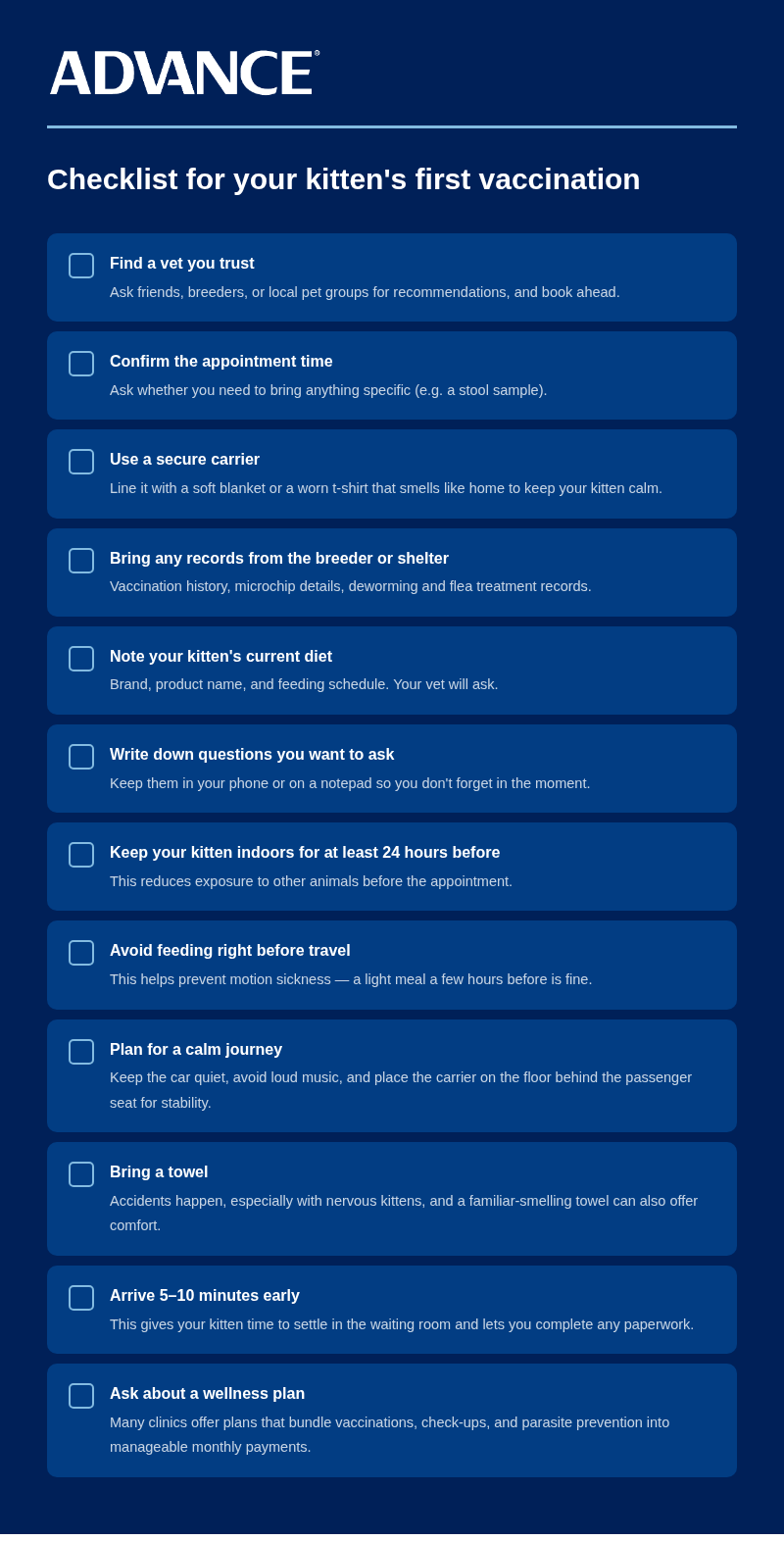
Before Your Kitten’s First Vaccination: A Quick Checklist
Heading to your first vet appointment? Run through this checklist so you and your kitten arrive ready and relaxed.
Looking after a kitten before their vaccinations requires care and planning – but it’s also one of the most rewarding stages of your cat’s life. With the right preparation, a trusted vet, and a little patience, you’re giving your kitten the safest possible start.
© 2023 Mars or Affiliates.