Sample

Puppy, Nutrition, Wellbeing

Understanding Digestive Upset in Puppies and Care Tips


Bellyache

Did you know that digestive upset is common in puppies?  Mouthy behaviour and an immune system that is still developing all put a puppy at increased risk of an upset tummy.  In addition, rapid dietary change and the stress associated with moving to a new home, plus other causes such as infectious agents, can lead to loose faeces, diarrhoea or vomiting. 

Avoid milk

Once puppies are weaned from their mother, they no longer require milk as part of their diet.  The feeding of cow’s milk to puppies can lead to digestive upset, and should be avoided.  Lactose-free pet milk is an option, but a complete and balanced puppy diet will supply all the essential nutrition your puppy needs. 

dogs

How can I avoid my puppy getting an upset tummy?

  • Ensure that your puppy's vaccinations and worming treatments are up to date
  • Don't let your puppy drink from puddles when out on walks  
  • Avoid access to food scraps and garbage
  • Offer small, frequent meals
  • Make any diet changes gradual, over a period of 7 days.  Add a small proportion of the new diet to the puppy’s regular diet on the first day.  The proportion of the new diet should be gradually increased each day, so that it makes up half of the puppy’s food on day 4 and the whole meal by day 7.

When to call the Vet

If your puppy is experiencing diarrhoea, vomiting or lethargy be sure to take them for a check-up at the Vet.  Dehydration can occur quickly in youngsters.  Signs of dehydration include dry skin that lacks elasticity such as neck skin that stays tented when gently pinched, lethargy, increased heart rate, high fever and a dry mouth.

By feeding a high quality, highly digestible puppy food you will reduce the chance of an upset tummy in your puppy.               
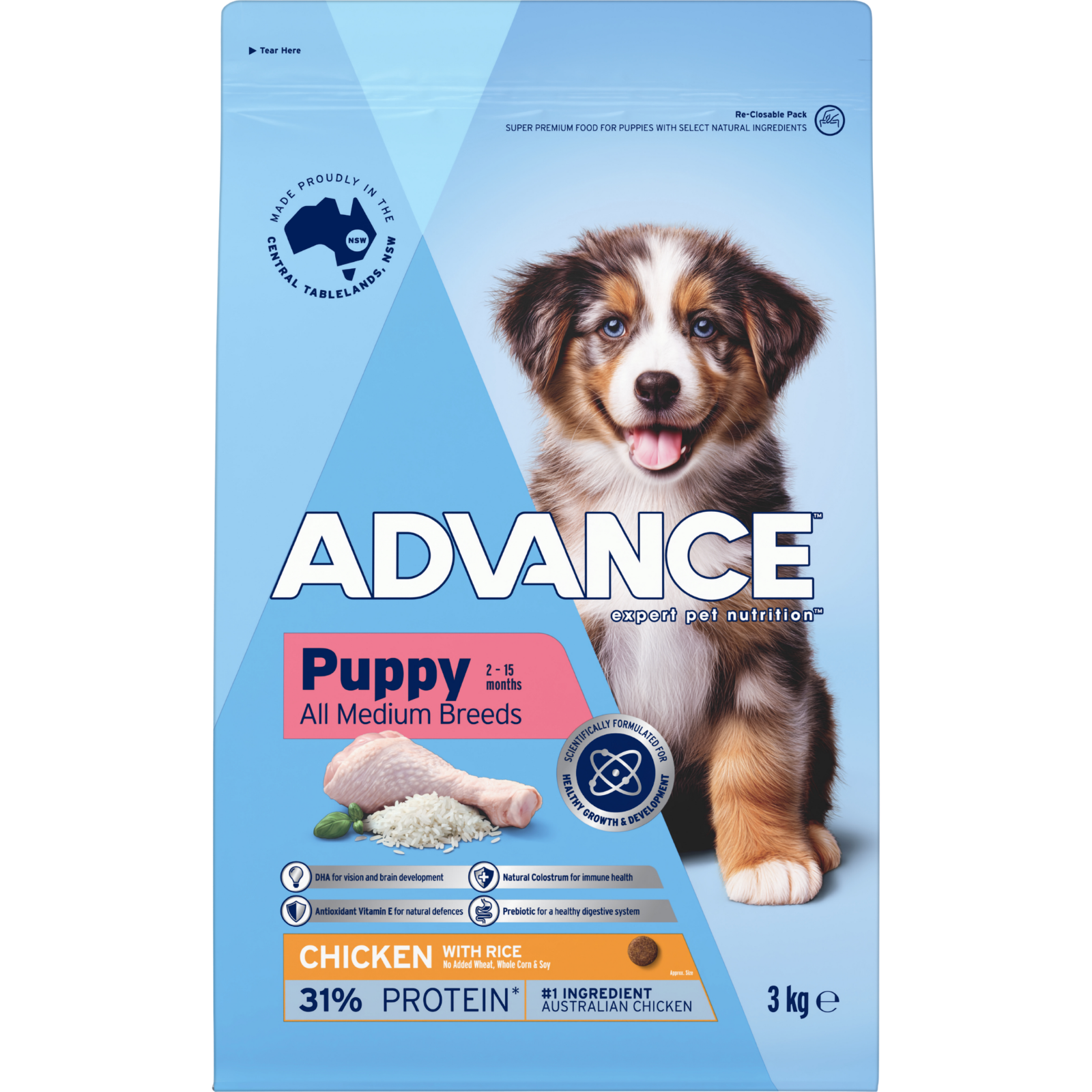
Tailored nutrition starts here: Take our quiz to discover a personalised food recommendation for your pet, based on their age, size and needs.

More advice for dog parents

View all dog advice

Expert Pet nutrition™

ing-1

Backed by Waltham Institute with 60+ years of research

ing-2

Quality ingredients and recipes, proudly made in Australia

ing-3

Tailored nutrition for every life stage, lifestyle or health need

Frequently Asked Questions

For a mild, short-lived upset, a highly digestible, bland diet is the gentlest option. Small, frequent meals of plain boiled chicken (no skin, no seasoning) with plain white rice can be offered for a day or two to help settle the tummy, before gradually transitioning back to their regular puppy food over 7 days. If your puppy has recurring or persistent digestive upset, speak to your vet about a specially formulated highly digestible or gastrointestinal puppy food, which is designed to be easy on the digestive system while still providing complete and balanced nutrition. Avoid offering cow's milk, fatty table scraps, or treats during a tummy upset, as these can make things worse.

Mild diarrhoea in puppies often settles within 24–48 hours, especially if it's caused by a minor dietary change, a new environment, or something they scavenged. However, if diarrhoea lasts longer than 48 hours, contains blood, is accompanied by vomiting, lethargy, or a loss of appetite, or if your puppy is very young, it's important to see your vet promptly. Puppies can become dehydrated quickly, so don't wait too long. If the diarrhoea is mild and your puppy is otherwise bright and alert, offer small, frequent meals of a bland, highly digestible diet and ensure they have access to plenty of fresh water.

A sudden change in diet is one of the most common causes of diarrhoea in puppies. A puppy's digestive system needs time to adjust to new ingredients and nutrient levels, and an abrupt switch can upset the balance of bacteria in their gut. To avoid this, always transition to a new food gradually over 7 days — start by mixing a small proportion of the new food into their current diet, then slowly increase the new food and decrease the old each day until the switch is complete. This gives the gut microbiome time to adapt and helps prevent loose stools and tummy upsets.

Occasional, isolated vomiting — such as bringing up a small amount of grass or eating a little too quickly — can be relatively common in puppies and isn't always cause for alarm. However, frequent vomiting, vomiting that persists for more than 24 hours, or vomiting accompanied by diarrhoea, lethargy, a swollen belly, or blood requires a prompt vet visit. Puppies are curious and prone to chewing and swallowing things they shouldn't, so vomiting can sometimes signal that they've eaten something harmful or swallowed a foreign object. When in doubt, it's always best to check with your veterinarian.

Signs of dehydration in puppies include dry, tacky gums, sunken eyes, and skin that loses its elasticity — you can check this by gently pinching the skin at the back of your puppy's neck; if it stays tented rather than springing back immediately, your puppy may be dehydrated. Other signs include lethargy, a faster-than-usual heart rate, and a dry nose. Puppies can become dehydrated quickly, especially with vomiting or diarrhoea, so if you notice any of these signs, contact your vet straight away. Offering small amounts of water frequently can help, but severe dehydration needs veterinary treatment.