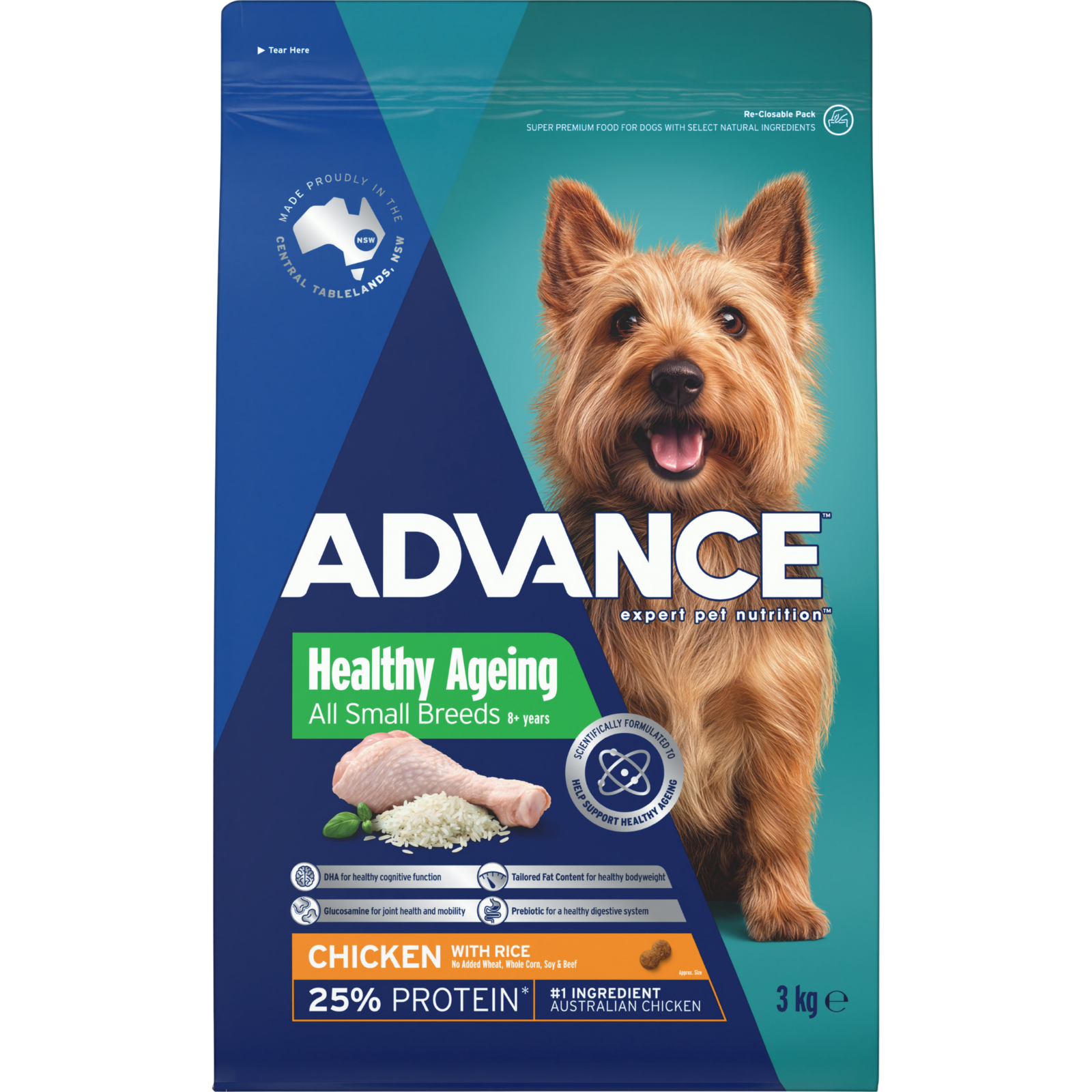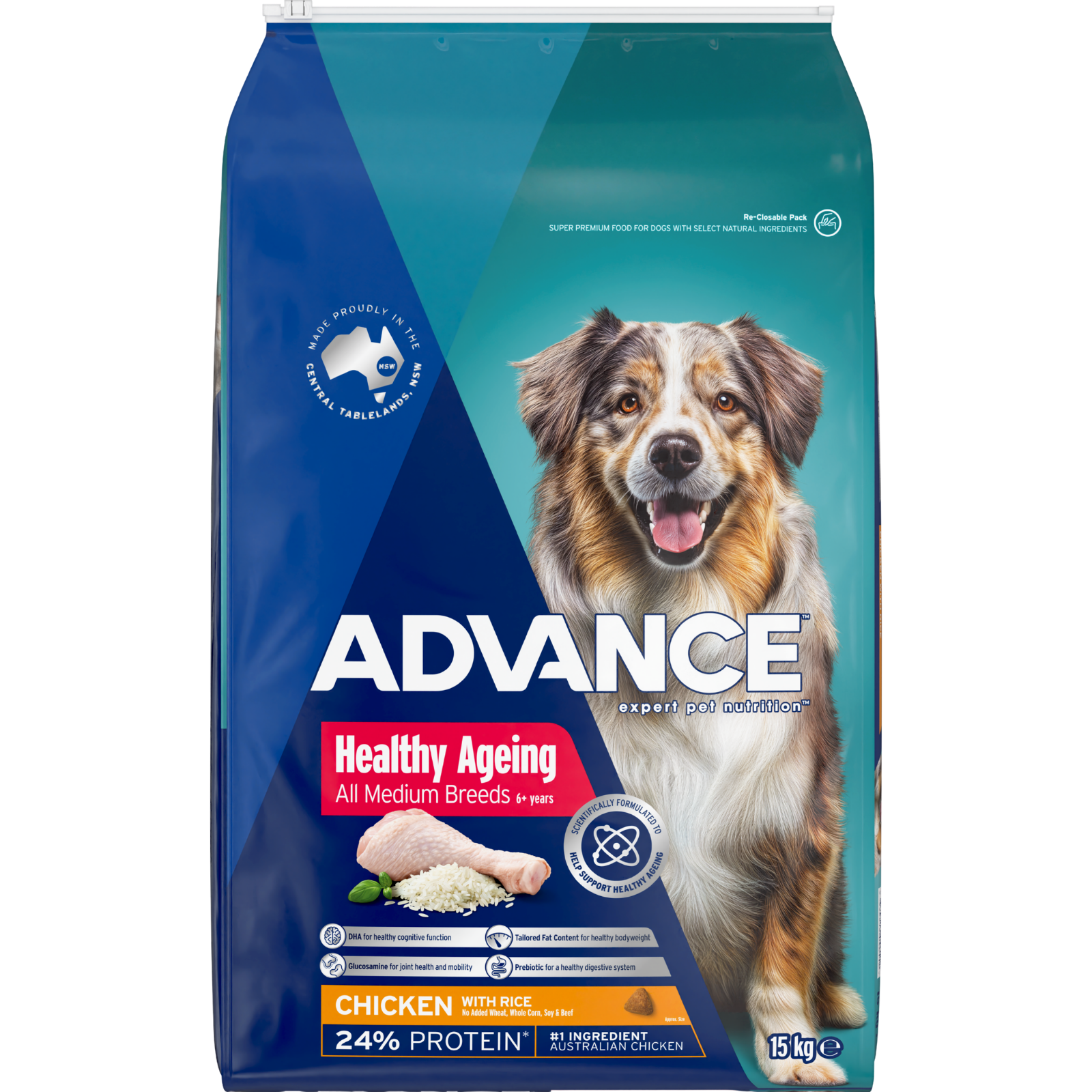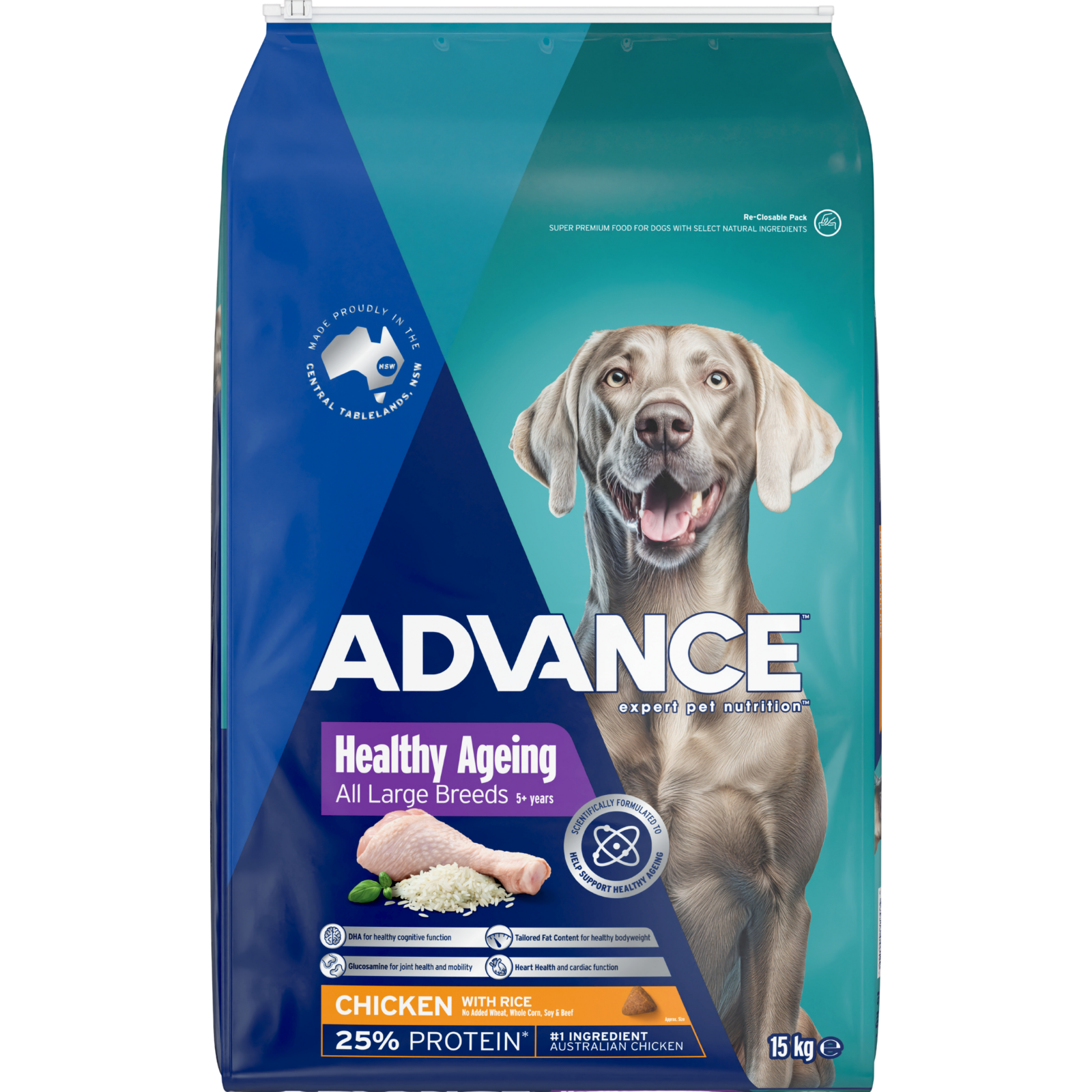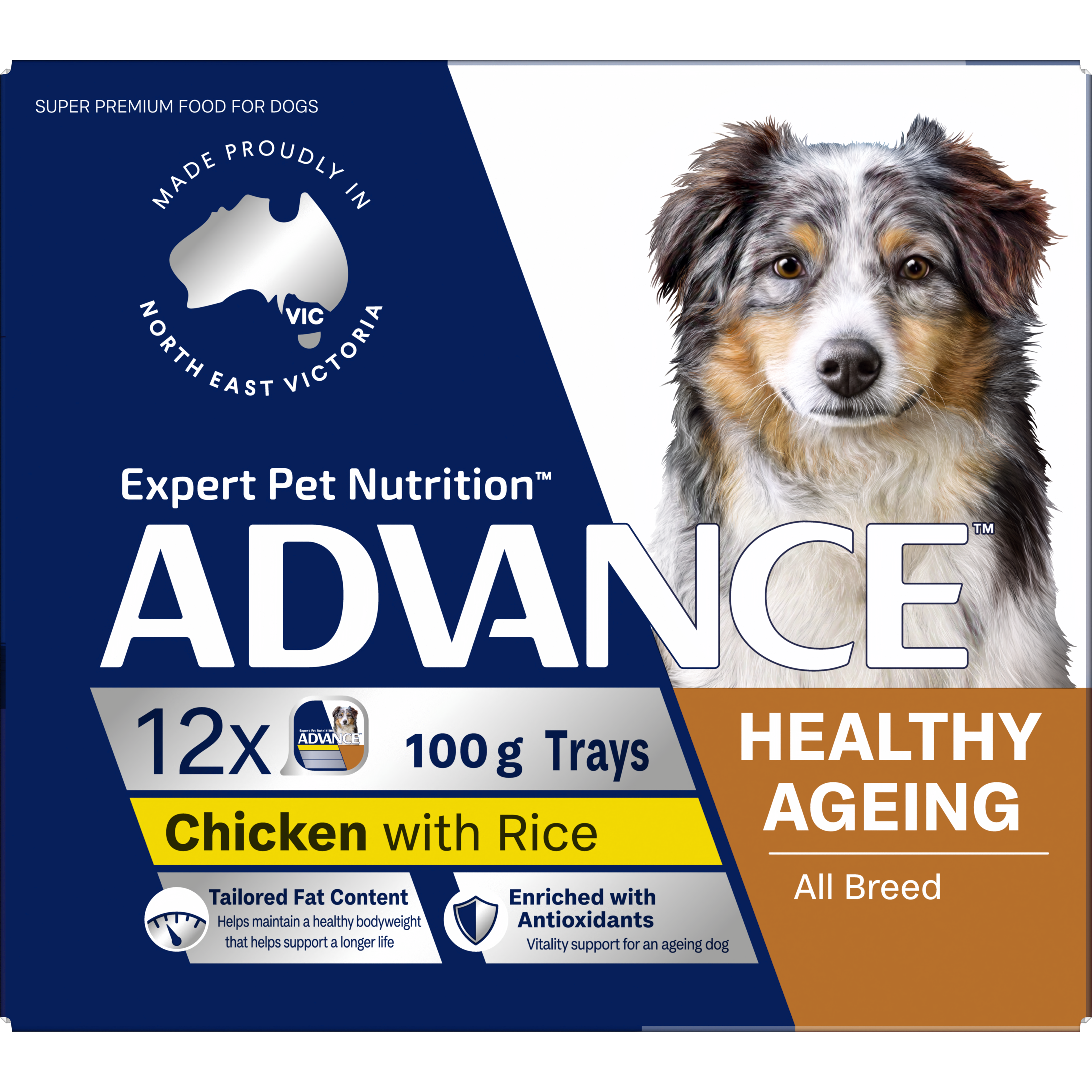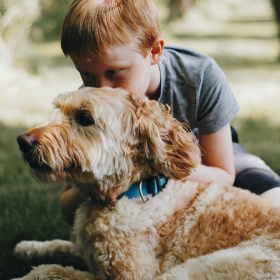
Larger dogs age faster — their bodies simply clock more wear per year — so they need the support of a healthy ageing recipe earlier. Smaller dogs live longer and age more slowly, so their transition comes later.
Getting the timing right — and matching the recipe to your dog's size — is one of the simplest, most powerful things you can do to help them live a long, healthy life.
Image by Madalyn Cox on Unsplash
Quick answer: when should your dog move to Healthy Ageing Nutrition?
ADVANCE™ recommends transitioning to a Healthy Ageing recipe based on your dog's size:
| Dog size | When to transition |
| Small breeds (under 10kg) | 8+ years |
| Medium breeds (10–25kg) | 6+ years |
| Large breeds (25kg+) | 5+ years |
The "seven years equals senior" rule underserves both ends of the size spectrum — too late for big dogs, too early for little ones. The Waltham Petcare Science Institute is clear that senior status varies by size and breed, not a fixed number on the calendar. Size is the better guide.
Why size changes the timeline
Larger dogs grow faster and age faster. The Waltham Petcare Science Institute notes that dogs are generally considered senior when they reach the last 25% of their expected lifespan — and because larger breeds have shorter lifespans, they hit that threshold sooner. The difference is tied to growth rate — bigger bodies simply mature and slow down sooner.
This matters for nutrition because your dog's body changes long before the grey muzzle gives it away. As dogs move into their mature years, the Waltham Petcare Science Institute's S H I N E framework explains that they typically:
- Need fewer calories — energy requirements decline as activity naturally eases, and weight gain can make it harder for a senior dog to stay active.
- Need more joint support — wear and tear adds up, especially in larger frames, and conditions like osteoarthritis become more common.
- May find harder foods more difficult — dental issues can make eating certain textures uncomfortable.
- Experience changes in smell and taste — their senses may be reduced or changed, so they may prefer different smells, textures and formulations.
Waltham's research also shows that dogs suffer from low-level inflammation and cellular damage through oxidative stress as they get older — which is why the right nutrition can help defend against the impact of ageing and potentially deliver more healthy, active years.
A healthy ageing recipe is designed to meet these changing needs before they become problems — supporting joints, mobility, bodyweight and overall wellbeing so your dog can keep thriving by your side.
What's inside every bowl of ADVANCE™ Healthy Ageing
Every ADVANCE™ Healthy Ageing recipe is made in Regional NSW with high-quality ingredients and over 25 years of scientific expertise, developed by a dedicated team of pet nutritionists. The hero ingredient across the range is one tiny, mighty shellfish.
Green Lipped Mussel — a powerhouse of joint nutrition
Derived from a specific species of shellfish dried into a powder, Green Lipped Mussel is high in cartilage-building blocks, Omega-3 fatty acids and other novel nutrients. It may help promote cartilage regeneration and reduce inflammation for better mobility.
The full nutritional picture
Each recipe is tailored to its breed size but shares a core nutritional foundation:
- Glucosamine & chondroitin — for joint cartilage support.
- Omega-3 fatty acids (including DHA) — for brain function and healthy inflammation.
- Vitamin E — an antioxidant to support immune health.
- Controlled fat levels — to help maintain a healthy bodyweight as activity naturally eases
- Inulin (a prebiotic) & beet pulp — to support gentle, healthy digestion.
Wet vs dry feeding: which is right for your mature dog?
The best choice depends on your dog, and many pet parents find the sweet spot is a bit of both.
Benefits of dry food
Dry food is convenient, easy to store, and cost-effective. For a mature dog who chews comfortably and drinks plenty of water, a quality dry recipe like ADVANCE™ Healthy Ageing is an excellent everyday foundation.
It's worth noting that dental disease affects over 80% of dogs over three years of age, so keeping an eye on dental health is important at every life stage.
Benefits of wet food
Older dogs may find harder foods more difficult if they have any dental issues, so the softer texture of wet food can be a relief. Their sense of smell and taste may also be reduced or changed with age, so they may prefer different smells, textures and formulations — and warming food slightly can increase its aroma and palatability to encourage intake.
Offering different textures and formulations can also contribute to mental enrichment and enjoyment at mealtime.
Benefits of mixed feeding
Mixing wet and dry combines the convenience of kibble with the palatability and texture variety of wet food. You can also soften dry kibble with a little warm water to make it easier to chew without changing foods entirely — and the warmth can help boost the aroma for a dog whose sense of smell has faded.
The key is to watch your dog — their appetite, their comfort at mealtime, their water intake — and adjust. You're the one who knows them best.
How to make the switch: a gentle transition
Whenever you change your dog's food — whether it's to a new life-stage recipe or a new format — take it slowly. Any change in diet should be done gradually over 7–10 days, by adding increasing amounts of the new food to their current diet. A gradual transition gives your dog's system time to adjust:
| Days | New food | Old food |
| Days 1–2 | 25% | 75% |
| Days 3–4 | 50% | 50% |
| Days 5–6 | 75% | 25% |
| Day 7+ | 100% | 0% |
A few tips to make it go smoothly:
- Increase gradually — add increasing amounts of the new food while decreasing the old, up to your dog's daily calorie requirement
- Watch your dog's response — if they go off their food or show any signs of digestive changes, slow the transition down
- Talk to your vet if you have any concerns, or if your dog has a sensitive stomach or underlying health conditions
Signs it might be time to transition (beyond the birthday)
Age is your starting point, but your dog will tell you when their needs are changing. Here are some changes to look for:
- A noticeable slowdown — less enthusiasm for long walks or play
- Weight creeping up on their usual portions, as energy requirements decline
- Stiffness or reluctance to move — conditions like osteoarthritis become more common in senior dogs
- Difficulty with harder foods — dental issues can make certain textures uncomfortable
- Changes in smell or taste preference — they may go off foods they used to enjoy, or prefer different aromas and textures
- A duller coat or changes in skin condition
If several of these sound familiar and your dog is approaching the age threshold for their size, it's a good moment to talk to your vet and consider the move to a healthy ageing recipe.
Choosing the right ADVANCE™ Healthy Ageing Nutrition for your dog
For small breeds (under 10kg) — transition at 8+ years
ADVANCE™ Healthy Ageing Small Breed Dry Dog Food gives smaller dogs the joint, mobility and wellbeing support they need as they enter their mature years — with a kibble size and nutrient balance designed for little mouths.
For medium breeds (10–35kg) — transition at 6+ years
ADVANCE™ Healthy Ageing Medium Breed Dry Dog Food is tailored to support joint health and overall wellbeing for your maturing medium dog, so they can thrive by your side for years to come.