Sample

Puppy, Behaviour, Training

How to Crate Train Your Puppy for Safe & Calm Behaviour

There's a small, quiet space in your home that could become your puppy's favourite place in the world - and it starts with a crate.

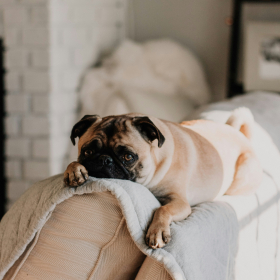
Photo by Ayla Verschueren on Unsplash 

A crate is far more than a training tool. Done well, crate training gives your puppy a calm, secure den of their own — a place to rest, reset, and feel safe. It teaches them the boundaries of the house while keeping them out of mischief, and it builds the gentle independence every dog needs to feel confident in the world.

In short, crate training is the positive, step-by-step process of teaching your puppy to feel relaxed and secure inside a crate — so it becomes their go-to safe space, not a place of punishment.

Why crate training is worth it

A crate gives your puppy something genuinely valuable: a den of their own. Dogs are naturally denning animals, and a well-introduced crate taps into that instinct. Here's what a crate quietly delivers:

  • A safe retreat when the world gets too busy or overwhelming
  • House-training support — puppies naturally avoid soiling where they sleep
  • Household safety — keeping curious pups away from hazards when you can't supervise
  • Travel readiness — a familiar portable home for holidays, vet visits, or recovery after surgery
  • Calm independence — the confidence to settle on their own, which helps prevent separation anxiety

Crates come in plastic, collapsible fabric, or wire. Whatever you choose, the crate should be big enough for your dog to stand up, turn around, and lie down comfortably — but not so large that they can soil one end and sleep in the other.

How to crate train your puppy, step by step

Crate training should always be positive and paced to suit your puppy. There's no race here — every pup finds their rhythm in their own time. The goal is a happy association, not a locked door.

Step 1: Make the crate inviting

Set the crate up in a quiet, family-friendly spot. Leave the door open. Place a soft blanket inside and scatter a few food rewards around the entrance, then a few more inside. Let your puppy wander over and investigate on their own terms. A puppy approaching a wire crate

Step 2: Build positive associations

Offer warm verbal praise whenever your puppy goes near or inside the crate. Feed meals near the crate at first, then gradually move the bowl inside. You're teaching a simple, generous lesson: good things happen here.

 A puppy entering a wire crate

Step 3: Practice short sessions with the door closed

Once your puppy is comfortable stepping in, gently close the door for a few seconds while they enjoy a treat or chew toy. Then open it again. Repeat, slowly stretching the time. Keep every session calm and rewarding.

 A puppy sitting in a crate with the door closed

Step 4: Gradually increase duration

With practice, your puppy will grow more comfortable spending longer in their crate. Build up the time in small increments — minutes today, a little more tomorrow. If your puppy whines, wait until they're quiet before letting them out, so you never accidentally reward the noise.

Step 5: Extend to alone-time and naps

When your puppy is relaxed in the crate with you nearby, start stepping out of the room for short stretches. Return calmly — no fuss, no fanfare. Over a week or two, build up to longer daytime naps and quiet settle-time in the crate. 
Using the crate at night

Once your puppy is happy spending time in their crate during the day, you can start using it at night. Provide chew toys to help them self-settle.

Here's the part many new pet parents don't expect: young puppies need regular toilet breaks through the night — roughly every 2 to 3 hours. Set your alarm clock. When you take your puppy out, keep it quiet and calm so it doesn't feel like playtime. Once they've relieved themselves, place them back in the crate to settle.

Over time, those nighttime breaks stretch out. Most puppies are sleeping through the night by around 16 weeks of age.

Want the full picture on your puppy's toilet routine? Read our expert guide to toilet training your puppy.

How long can a puppy stay in a crate?

Crate time should always match your puppy's age and bladder capacity — never the owner's schedule. A widely used rule of thumb: a puppy can hold their bladder for roughly one hour per month of age, plus one. An 8-week-old puppy therefore tops out around 2–3 hours during the day.

Puppy ageSuggested max. crate time (daytime)
8 - 10 weeks30 - 60 minutes
11 - 14 weeks1 - 3 hours
15 - 16 weeks3 - 4 hours
17+ weeks4 - 6 hours

Overnight stretches may be slightly longer, but young puppies still need scheduled toilet breaks.

Crating is about rest and safety — not long confinement. Total crated time (including overnight sleep) can make up much of a young puppy's 18–20 hours of daily rest, but it should always be broken up with frequent toilet, play, and cuddle breaks.

How long does crate training take?

Most puppies accept the crate within one to two weeks of consistent, gradual introduction; some settle in a few days. The speed depends almost entirely on how positive each association has been. Breeds prone to anxiety, or puppies with difficult early experiences, may take three to four weeks. Consistency matters far more than speed — rushing often causes setbacks that extend the overall timeline.

A gentle reminder

The crate should never be used as punishment. If your puppy comes to associate it with scolding, the whole purpose — a calm, safe den — is lost. Keep every interaction positive, patient, and kind.

With some practice and patience, your puppy will come to view their crate as a wonderful place — a safe haven for rest, recovery, and quiet time. It's one of the smallest things you can set up, and one of the biggest difference-makers in your puppy's everyday wellbeing.

Keep building that bond

You've got the crate sorted — now keep building that bond. For more expert advice on every stage of your puppy's journey, explore our ADVANCE™ Pet training guides.

Tailored nutrition starts here: Take our quiz to discover a personalised food recommendation for your pet, based on their age, size and needs.

More advice for dog parents

View all dog advice

Expert Pet nutrition™

ing-1

Backed by Waltham Institute with 60+ years of research

ing-2

Quality ingredients and recipes, proudly made in Australia

ing-3

Tailored nutrition for every life stage, lifestyle or health need

Frequently Asked Questions

You can start crate training as early as 8 weeks old, the age most puppies arrive in their new home. Starting early is ideal because young puppies adapt quickly and the crate taps into their natural denning instinct. Older puppies and adult dogs can absolutely learn too — it just may take a little more patience and consistency at any age. 

A good rule of thumb is one hour per month of age, plus one — so a 2-month-old puppy manages about 2–3 hours maximum during the day. By 17+ weeks, puppies can generally handle 4–6 hours. Always break crate time up with regular toilet, play, and cuddle breaks, and never use the crate for long confinement. 

Some whining in the first few nights is normal and doesn't mean training has failed. First, check whether your puppy needs a toilet break (young pups need one every 2–3 hours overnight). If they've just been out, wait until they're quiet before responding, so you don't accidentally reward the crying. Keep nighttime trips calm and low-key — no play, no fuss. 

Yes — a soft blanket or bed makes the crate feel like a cosy den, and safe chew toys help your puppy self-settle. Avoid anything that could be shredded or swallowed, especially with young puppies. Feeding meals inside the crate also strengthens the positive association, so your puppy learns that good things happen there. 

Absolutely. Puppies naturally avoid soiling where they sleep, so a correctly sized crate reinforces bladder control and supports toilet training. The crate should be big enough to stand, turn, and lie down — but not so large that they can soil one end and sleep in the other. Pair crate time with a regular toilet-break schedule and plenty of praise for going in the right spot.