Key Takeaways
- The Golden Retriever: a friendly, intelligent sporting breed originally developed in Scotland for retrieving game — now one of the world’s most popular family dogs, valued for its gentle, people-oriented nature.
- Size & growth: adult males typically weigh 29–34kg and stand 58–61cm; females are slightly smaller at 25–29kg and 54–57cm, with a longer growth period than smaller breeds.
- Feeding: Golden Retrievers are notorious food lovers, so feeding balances meeting life-stage nutrition with careful portion control to prevent the weight gain the breed is prone to.
- Care essentials: they need around 90–120 minutes of exercise and enrichment a day, regular grooming of a dense double coat, and routine vet checks — with a typical lifespan of 10–12 years.
Images by Helena Lopes and Andrew Schultz on Unsplash
This Golden Retriever breed guide covers everything you need to know about Golden Retriever personality, everyday care, feeding through every life stage, exercise, grooming, health, life expectancy and training — so you can help your Golden live a long, healthy, happy life.
Golden Retriever Personality Traits Every Owner Should Know
There’s a warmth to every Golden Retriever that’s hard to put into words — but easy to feel. Golden Retriever personality is gentle, affectionate and highly sociable, with a natural patience that makes them well suited to busy family households. They genuinely love people, and they show it: a wagging tail, a softly placed head on your knee, a willingness to be part of whatever the family is doing. That people-focus is their superpower, but it’s also something to plan for — a Golden Retriever dog thrives on company and can feel lost without it.
What Makes Golden Retrievers Such Beloved Family Dogs?
It’s no accident Golden Retrievers are one of the world’s most beloved family dogs. They:
- are tolerant and gentle with children
- get along well with other dogs and pets when socialised early
- are highly trainable and food motivated
- thrive on human company and don’t do well left alone for long periods
Their sociable, people-focused nature means they can be prone to separation-related stress if left without enough companionship or mental stimulation — so building calm alone time from puppyhood matters.
Are Golden Retrievers Good With Children?
Yes — Golden Retrievers are often considered excellent family companions thanks to their patient, gentle temperament. As with any breed, reinforce safe interactions and always supervise young children and dogs together.
Are Golden Retrievers Good With Other Dogs?
Early socialisation helps Golden Retrievers develop positive, relaxed relationships with other dogs. Their naturally friendly disposition makes them a great fit for multi-dog households.
Can Golden Retrievers Live With Cats?
With gradual introductions and early exposure, most Golden Retrievers live successfully with cats and other small pets. Their retrieving instinct can mean a fascination with chasing, so management and reward-based training help everyone settle.
Are Golden Retrievers Good for First-Time Owners?
Their trainability and friendly temperament often suit first-time owners who can meet their exercise and grooming needs. They’re forgiving of novice mistakes — just be ready for the daily commitment a large, active breed brings.
Best Home Environment for a Golden Retriever
A household with time for daily exercise, companionship and training suits a Golden Retriever best. They want to be where their people are, and they blossom with routine and involvement in family life.
Can Golden Retrievers Live in Apartments?
Apartment living is possible only if owners consistently provide sufficient exercise, enrichment and outdoor time. Their size and energy mean a backyard or regular access to open space makes day-to-day life easier — but the real requirement is commitment, not square metres.
Golden Retriever Size and Growth
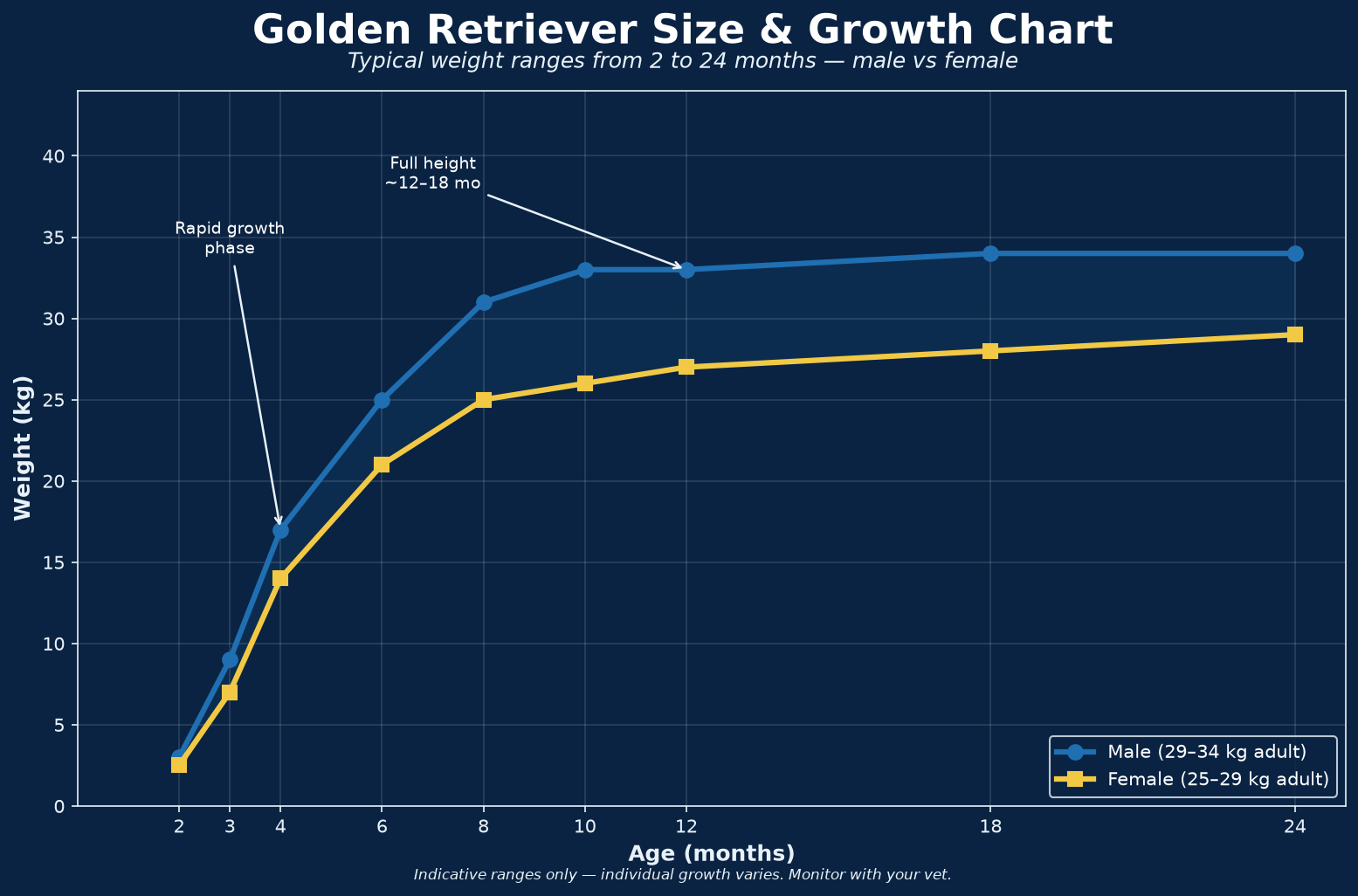
Adult male Golden Retrievers typically weigh 29–34kg and stand 58–61cm tall, while females are slightly smaller at 25–29kg and 54–57cm. Golden Retrievers are a large breed with a longer growth period than smaller dogs — they generally reach full adult height by around 12–18 months but continue to fill out in body condition until closer to 2 years.
Male vs Female Golden Retriever Size
Males are typically larger and taller than females by around 5–8 centimetres and several kilograms, though individual variation means both sexes can sit anywhere across the typical range.
Golden Retriever Growth Stages
From a small, fast-growing puppy through a lanky adolescence to a muscular adult, Golden Retrievers pass through distinct milestones. The first year brings rapid growth; the second year is about filling out and maturing.
When Are Golden Retrievers Fully Grown?
Adult height is often reached around 12–18 months, but physical maturity — muscle, chest depth and body condition — continues beyond this, often until around 2 years.
Monitoring Healthy Growth
Body condition, steady weight gain and veterinary advice are better indicators than age alone. A useful tool is the WALTHAM™ Puppy Growth Charts — based on data from 50,000 healthy young dogs, they let you and your vet compare your puppy’s weight against healthy growth standards and spot any unusual changes early.
Signs Your Golden Retriever Is Overweight
Watch for reduced waist definition, difficulty feeling the ribs, and declining stamina. Because Goldens love food, regular body-condition checks are one of the simplest ways to protect their long-term health — and the WALTHAM™ Pocket Book of Healthy Weight Maintenance offers practical guidance.
Feeding a Golden Retriever Through Every Life Stage
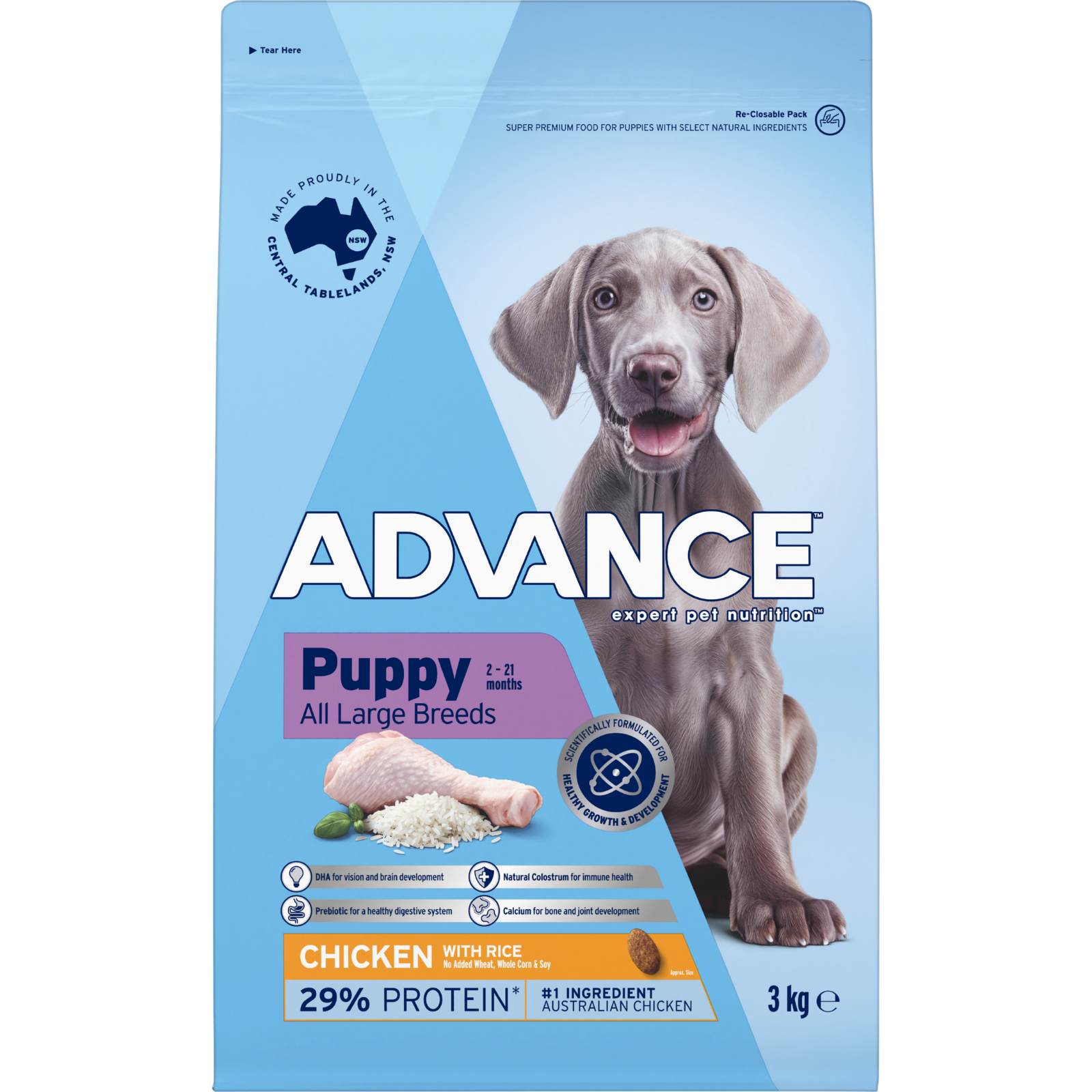
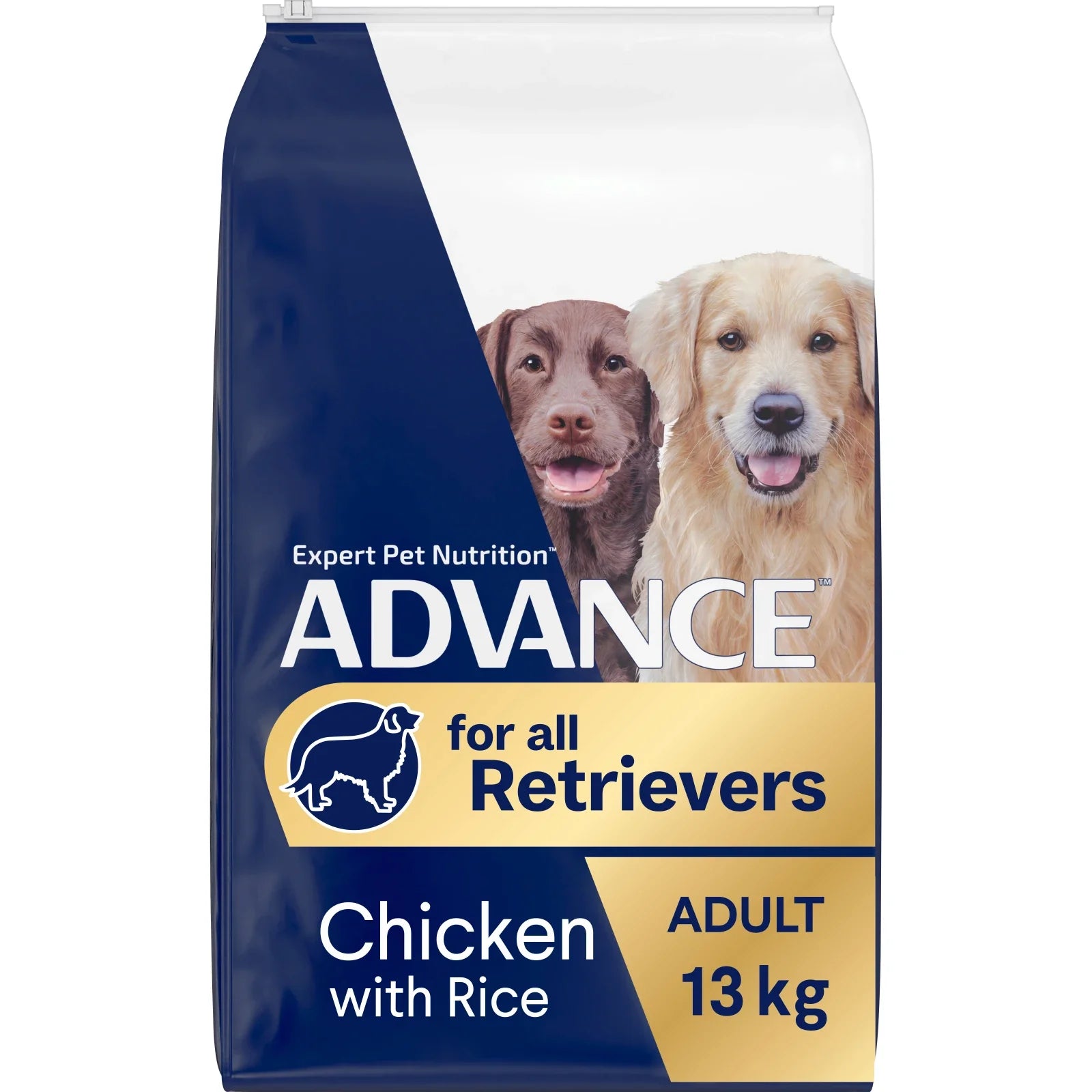
Golden Retrievers are notorious food lovers, so feeding needs to balance meeting their nutritional requirements at each life stage with careful portion control to prevent the weight gain the breed is prone to. That’s the heart of golden retriever food and golden retriever dog food: matching nutrition to the life stage, and the dog in front of you. The good news is that at ADVANCE™, we have food tailored specifically for retrievers, designed to support the skin, coat and joint needs the breed can be prone to.
Nutritional Needs of Golden Retrievers
Balanced nutrition supports healthy growth, lean muscle, healthy joints and sustained energy. A complete food, fed in measured portions, does more for a Golden than any single supplement.
Choosing the Right Dog Food
Life stage, activity level and body condition should guide food selection. A working or highly active Golden needs more than a quieter companion dog — so adjust portions to the real dog, not the breed average.
Managing a Healthy Weight
Golden Retrievers benefit from regular body-condition assessments due to their tendency to overeat. A lean Golden is a healthier Golden, and weight management protects joints and overall wellbeing.
Feeding Based on Activity Level
Portions should flex with exercise and lifestyle — more on heavy training or field days, less on quiet rest days. Consistency matters more than precision on any single day.
How Many Meals Should a Golden Retriever Eat?
Feeding frequency changes from three to four small meals as a puppy, to two measured meals as an adult, and two tailored meals as a senior.
Golden Retriever Puppy Feeding
Golden Retriever puppies should be fed a large-breed puppy formula that supports controlled growth, since growing too quickly can increase the risk of joint problems later in life. Three to four small meals a day, tapering to two by around six months, helps manage steady, healthy growth. Look for a puppy formula with DHA to support brain and vision development.
You can read about the role of DHA for puppies and kittens in our helpful guide.
Feeding an Adult Golden Retriever
Adult Golden Retrievers should be fed a complete adult food, split into two measured meals a day, with portions adjusted for activity level rather than left to free feeding. A tailored option like ADVANCE™ Retrievers Adult Dry Dog Food Chicken with Rice is made specifically for retrievers, with skin and coat support plus green-lipped mussel powder for joints — developed alongside the Waltham Pet Science Institute. They’re especially prone to fast eating and overeating, so slowing down mealtimes and sticking to consistent portions matters more for this breed than most.
Try our tips on slowing down your dog’s eating.